God’s Land Promise to Israel—Fulfilled!
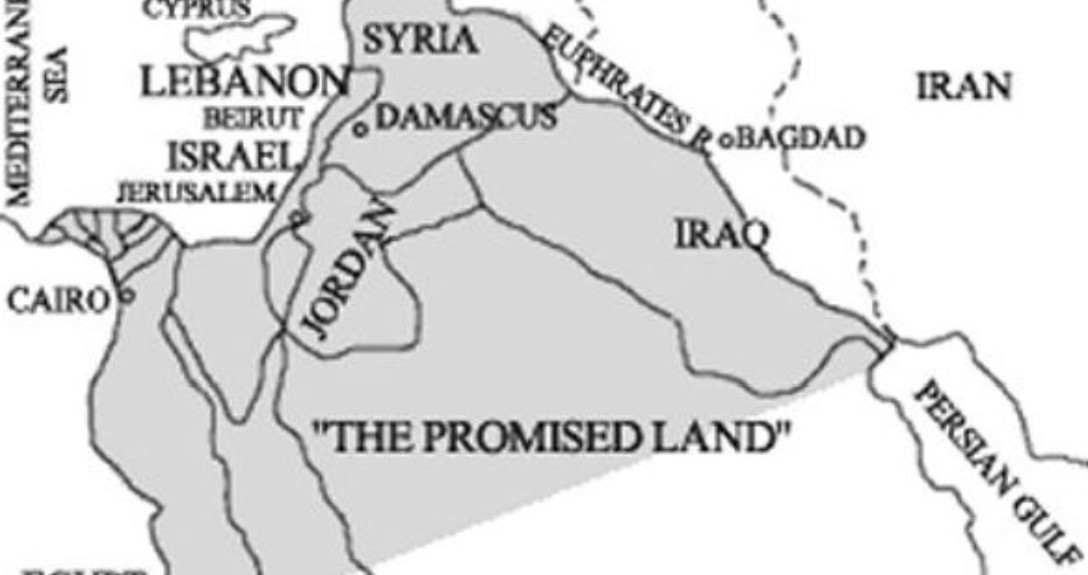
“Abram passed through the land to the place of Shechem, as far as the terebinth tree of Moreh. And the Canaanites were then in the land. Then the Lord appeared to Abram and said, ‘To your descendants I will give this land’” (Gen. 12:7).
Many Christians believe this land promise is still unfulfilled. But Joshua—who lived around 500 years after Abraham—said it had been fulfilled:
“So the Lord gave to Israel all the land of which He had sworn to give to their fathers, and they took possession of it and dwelt in it…Not a word failed of any good thing which the Lord had spoken to the house of Israel. All came to pass” (Joshua 21:43-45).
What more is there to say after this? Joshua clearly believed Israel received the land promised by God—no ifs, ands, or buts about it. In fact, Moses was the one who had led the exodus from the bondage in Egypt…to the promise land “flowing with milk and honey” (Ex. 3:8)—although Moses himself could not enter it because of his sin (Deut. 32:51-52).
The Second Exodus
As important as this exodus to the promise land was in Israel’s history, it pales in comparison to the second exodus that Jesus led. Like Moses, Jesus led people from bondage to freedom. Only Jesus led the faithful from the bondage of sin/the law…into the true promised land, where there is rest from the law, forgiveness of sin, and eternal life (Heb. 3:15-4:11). Unlike Moses, though, Jesus was sinless and made it into the promise land! Moses led the first forty-year exodus (c. 1500 BC), and Jesus led the second forty-year exodus (AD 30–AD 70). The first exodus was the type/shadow [1]; the second exodus was the spiritual reality.
And this spiritual reality is what Abraham—to whom God had given the land promise—ultimately looked forward to:
“By faith he [Abraham] dwelt in the land of promise as in a foreign country, dwelling in tents with Isaac and Jacob, the heirs with him of the same promise; for he waited for the city which has foundations, whose builder and maker is God” (Heb. 11:9-10).
The writer of Hebrews went on to say that the Old Testament saints desired “a better, that is, a heavenly country…for He [God] has prepared a city for them” (Heb. 11:16).
This is what the ultimate fulfillment of the land promise was all about—a city whose builder is God—and it is fulfilled in Christ:
“And if you are Christ’s, then you are Abraham’s seed, and heirs according to the promise” (Gal. 3:29). “For all the promises of God in Him are Yes, and in Him Amen” (2 Cor. 1:20)
This is the ultimate fulfillment of the land promise. The faithful today are in the city of God, aka the church:
“But you [Christians] have come to Mount Zion and to the city of the living God, the heavenly Jerusalem, to an innumerable company of angels, to the general assembly and church of the firstborn who are registered in heaven, to God the Judge of all, to the spirits of just men made perfect, to Jesus the Mediator of the new covenant” (Heb. 12:22-24).
This is the city of God that the old covenant saints longed for, and it arrived in the first century. Jesus, too, talked about this city during his earthly ministry. Jesus told the Samaritan woman:
“Woman, believe Me, the hour is coming when you will neither on this mountain, nor in Jerusalem, worship the Father…But the hour is coming, and now is, when the true worshipers will worship the Father in spirit and truth; for the Father is seeking such to worship Him. God is Spirit, and those who worship Him must worship in spirit and truth” (John 4:21–24).
This prophecy was fulfilled in its fullness when physical Jerusalem was destroyed in AD 70. Since that time, God’s people have been in the new Jerusalem from above that is free from bondage (Gal. 4:25-26)!
For more information about the topics discussed in this article, please see my book The End Is Here: How the New Testament Prophecies Were Fulfilled, available NOW on Amazon!
[1] A type/shadow points forward to, or foreshadows, a greater event, person, or reality. Once that greater event/person/reality appears—which is called the “antitype”—the type/shadow loses its significance. For example, Moses was a type of Christ (Heb. 3:1–2). Physical circumcision was a type/shadow of the greater spiritual circumcision of the heart (Col. 2:11). The law was a shadow of the better new covenant realities (Heb. 10:1). Saturday Sabbath/rest from physical labor was a type/shadow of ultimate rest in Christ (Heb. 3:7–4:16). These kinds of old covenant types and shadows pointed forward to the greater new covenant realities.