Does the End of the Law = Lawlessness?
The New Testament teaches that the Law—aka the Old Covenant—ended in the first century:
AD 62: In that He [God] says, “A new covenant,” He has made the first [covenant] obsolete. Now what is becoming obsolete and growing old is ready to vanish away” (Heb. 8:13).
The temple standing in Jesus’ day symbolized the Old Covenant (Heb. 9:8–9), and when that temple was destroyed in AD 70, it meant the Law had officially ended.
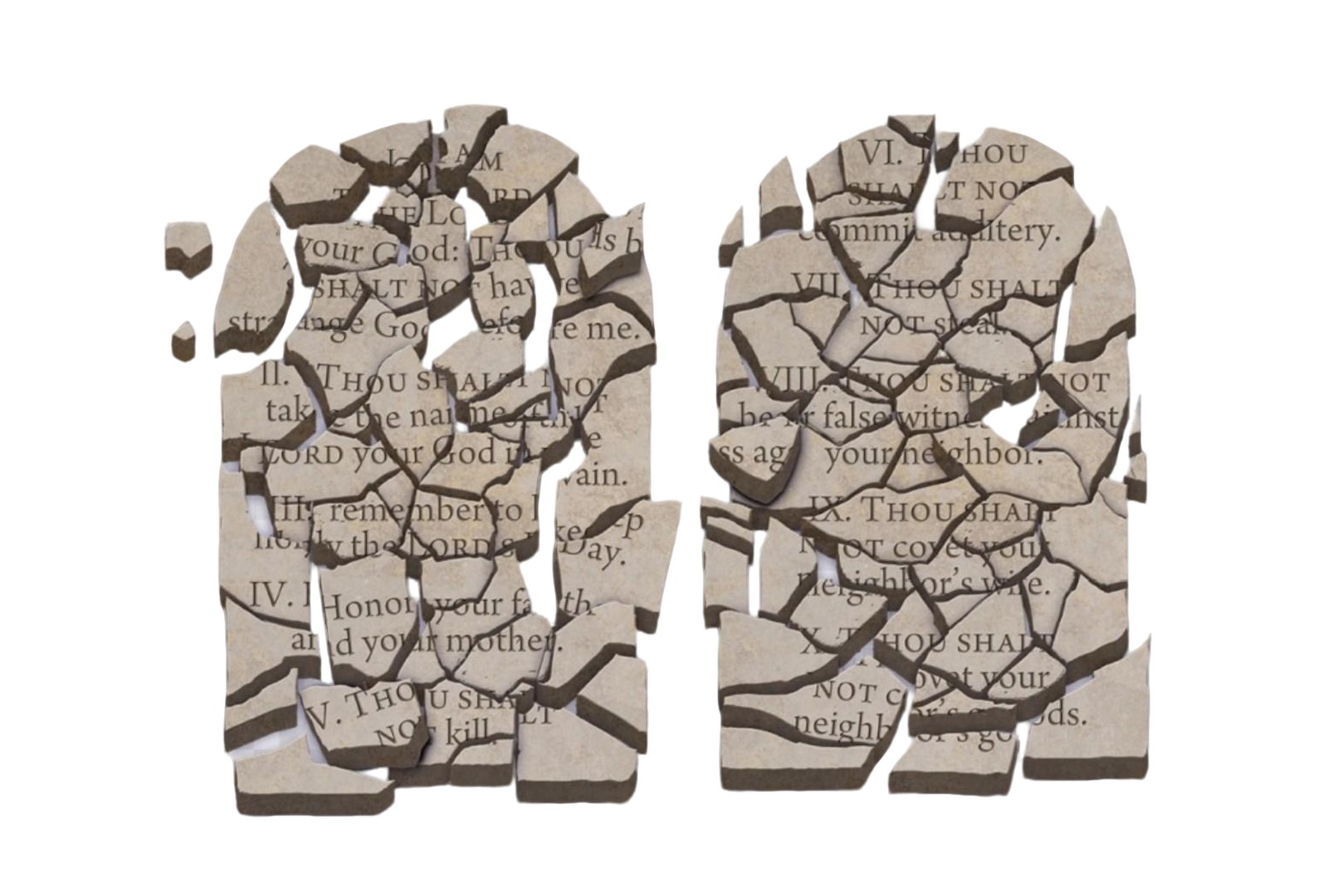
The question then becomes: If the Law has ended, does this mean we are free to lie, steal, and murder? After all, the prohibitions against such things were part of the Law…which ended in AD 70.
Response: May it never be! While the ceremonial aspects of the Old Covenant Law have ended—such as animal sacrifices, Sabbath keeping, physical circumcision, dietary restrictions, feast day observances, etc.—the moral aspects will never end. Why not? Because these are part of God’s holy character—not merely the Law—and God’s character will never change.
God’s moral laws were around long before the Law ever came into existence (see Genesis 3), and they will always be so. In fact, people do not even need Scripture to know about God’s moral laws because people are all made in the image of God and are thus intuitively aware of them: “For since the creation of the world His invisible attributes are clearly seen, being understood by the things that are made, even His eternal power and Godhead, so that they [Gentiles, pagans, atheists, etc.] are without excuse” (Rom. 1:20). Paul also mentions Gentiles without the Law doing what the Law requires (Rom. 2:14–15)—morally speaking, of course, as most Gentiles throughout history did not even know that the ceremonial aspects of the Law existed.
Since people are made in God’s image, therefore, people intuitively know that things like murder, theft, and lying are wrong. This is why all cultures and societies throughout history—whether they’ve had special revelation (the Holy Scriptures) or not—have enacted prohibitions against such things. God’s moral laws are self-evident truths that were around long before the Law ever came into existence—and they will always be so!
The ceremonial aspects of the Mosaic Law, on the other hand, were types/shadows that pointed forward to the New Covenant realities. And once the New Covenant realities arrived, then the types/shadows became obsolete and vanished away (Heb. 8:13). For example, the Saturday Sabbath pointed forward to the Sabbath rest in Christ (Heb. 3:7–4:16). Likewise, physical circumcision was a type/shadow that pointed forward to spiritual circumcision “not made with hands” (Col. 2:11). Similarly, the annual Passover sacrifice of a lamb was a type/shadow that pointed forward to Jesus’s sacrifice on the cross (1 Cor. 5:7). The ceremonial aspects of the Law were types/shadows that pointed to the “good things to come [New Covenant realities]” (Heb. 10:1, Col. 2:17); and once the New Covenant realities arrived, then the Old Covenant types/shadows became obsolete and passed away (Heb. 8:13).
Although the ceremonial aspects of the Law passed away when the temple fell in AD 70, the moral aspects—such as: do not murder, do not steal, do not lie, and so on—will never pass away because these are part of God’s holy character, which cannot change.
So while Christians are not required to observe the ceremonial aspects of the Old Covenant Law, we are required to obey God’s moral law, aka Christ’s Law (1 Cor. 9:21; Gal. 6:2)…and Christ’s Law (aka the gospel, the New Covenant) will never end!
For more information about the topics discussed in this article, check out my book The End Is Here: How the New Testament’s Prophecies Were Fulfilled, available NOW on Amazon!
By Alex Polyak, Director of The Bible Fulfilled, 1/30/25